
Decoding the King’s Cloth and the Symbolism Behind Today’s Ceremony
Akosa Teaches
As earlier reported by Efikesiem, history was about to be made at Manhyia Palace-and today, it truly was.
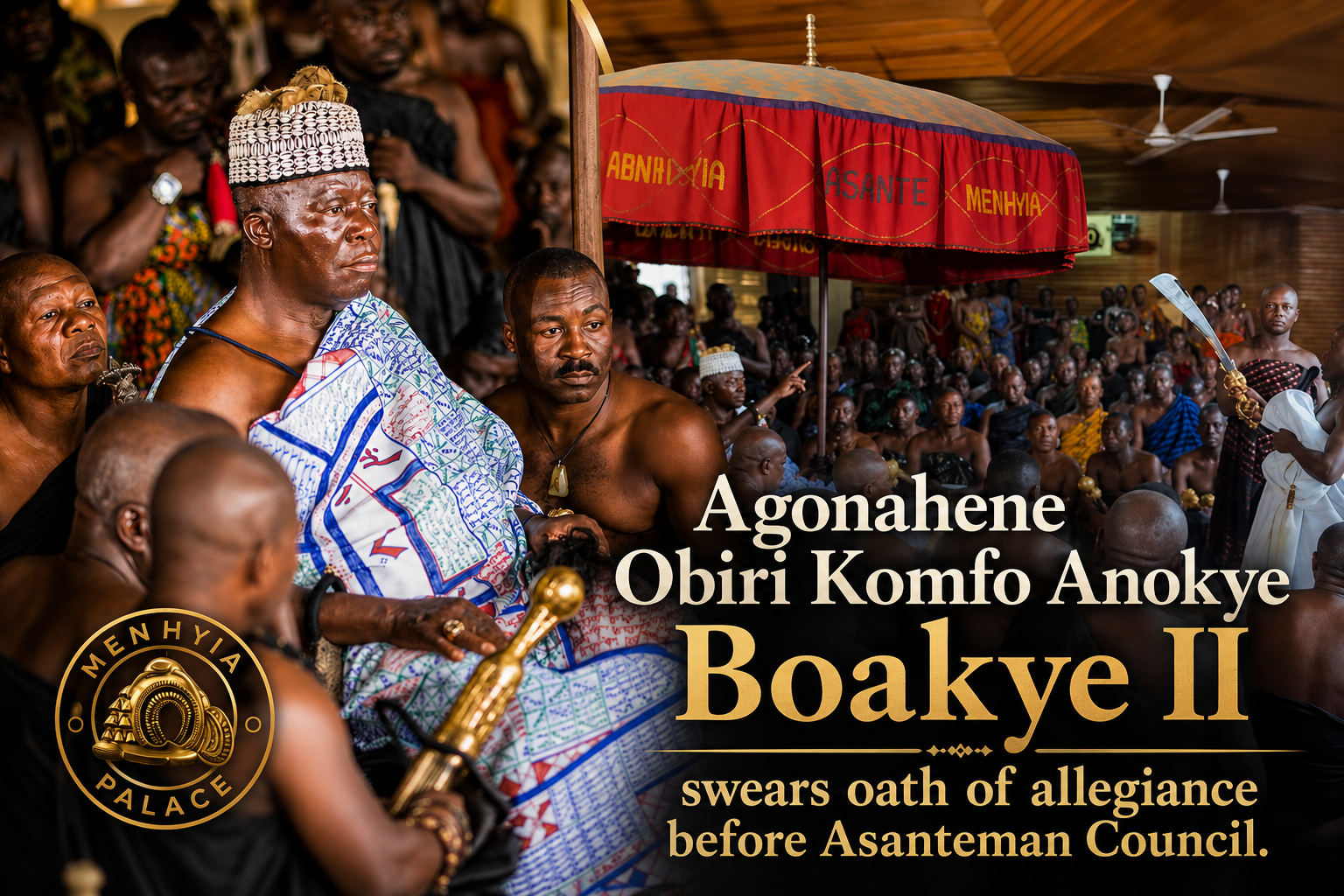
For many, this was the first time witnessing an Agonahene swear the oath before Otumfuo. While some expected an ordinary swearing ceremony, what unfolded was a profound display of Asante customs, symbolism, and tradition.
Akosa Teaches
One memorable moment came when Agonahene appeared in black. Otumfuo corrected him, explaining that Agona does not wear black because a Komfoo does not represent sadness. It was a lesson that every detail in Asante tradition has meaning.
Akosa Teaches
The King’s attire also told a story.
Otumfuo wore the renowned Hye WAnhye cloth, symbolizing resilience against forces regarded as powertu. Beyond its well-known meaning, today’s cloth featured an eagle motif. The eagle, king of the skies, represents strength, courage, authority, and supremacy. Its inclusion reinforced the cloth’s symbolism of spiritual and royal power. Such cloth is traditionally worn during ceremonies involving akomfos, nsuman, and other sacred traditional rites.
Though Otumtuo has worn similar cloth before,
today’s version carried its own unique significance.
Akosa Teaches
Equally symbolic was the King’s hat, known as Gyata Sedesky. Adorned with cowries and topped with the paw and claws of a lion, it reflected both spiritual authority and royal strength. The lion’s claws symbolize unmatched power, while the cowries have deep connections to traditional priesthood and spirituality.
It should also be remembered that the Agonahene occupies a special place in Asante history, traditionally recognized as a trusted ally who helped Otumfuo build and strengthen Asanteman.
Akosa Teaches
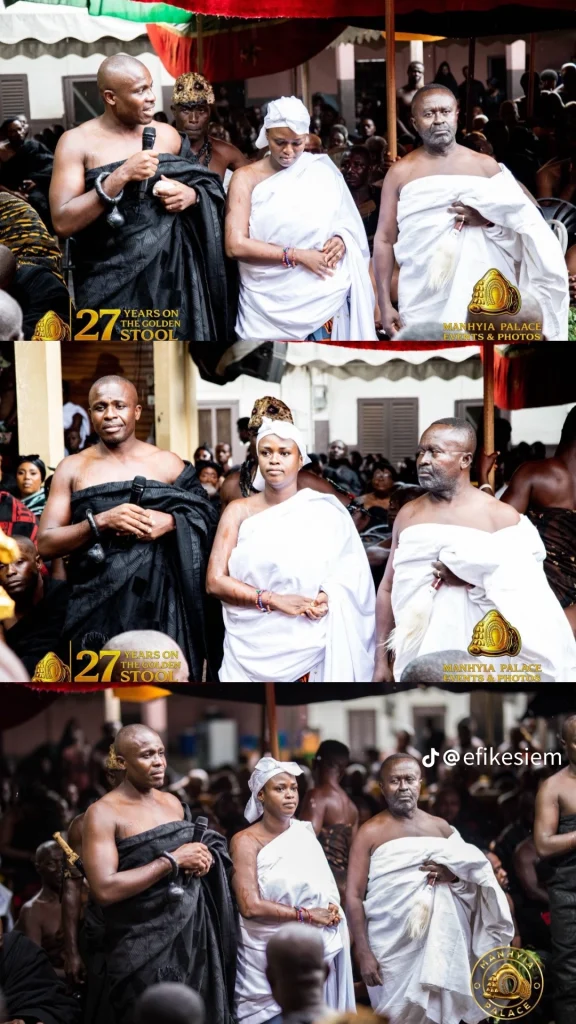
Today’s event was more than a ceremony—it was history brought to life, with every word, cloth, and symbol carrying centuries of meaning.
Pc:::Manhyia palace
